Have you met my friend, Isomalt?
Many of our readers know that Sidney Galpern, of Simi Cakes, is a frequent guest instructor at ISAC. Sidney is a superb all around pastry chef, but she is best known for her isomalt designs. Many of our students have taken classes with Sidney in Studio B, and we are so excited to be offering two classes with Sidney this June. In the past, I had written a few blogs dedicated to different products that shape the cake decorating (and pastry) world. As I was brainstorming ideas for this week’s blog, I reread some of these previous blogs for a bit of inspiration. I thought it might be fun to tell you all about this history and science behind isomalt. And, Sidney, if you are reading this- I hope I get it all right!

Isomalt is not really sugar. Nope. It is derived from sugar though; sucrose to be exact. It looks much like ordinary white table sugar because it is a crystalline, white, and odorless. It is a type of sugar substitute, and as it is very similar to table sugar, the products made from it will have the texture and appearance the same as those products made from real sugar. As a sugar substitute it’s often used to make sugar-free candies and low-calorie foods. Good for those with diabetes (isomalt has a low glycemic index) or looking to live a healthier life-style. OH, and ya know what else? It won’t cause tooth decay! Um, yay.
Discovered in the 1960s, it didn’t gain popularity until recently. It has been available in Europe since the 1980s and in the United States since 1990. Isomalt is permitted in over 70 countries altogether, including Canada, Australia, New Zealand, Japan, Iran, Mexico, and in many Asian and South America. For those of you who love a good science lesson, here is a quote on how isomalt is made from www.polyols.org:
“The two-step process begins with sucrose. First, an enzyme rearranges the linkage between glucose and fructose in sucrose. In the second step, two hydrogens are added to an oxygen in the fructose portion of the disaccharide. Approximately half of the fructose portion of the original disaccharide is converted to mannitol and about half of the fructose portion of the original disaccharide is converted to sorbitol. Therefore, isomalt contains two different disaccharide alcohols: gluco-mannitol and gluco-sorbitol.
The molecular changes that occur in these steps make isomalt more stable – chemically and enzymatically – than sucrose. Isomalt’s stability is the reason for many of its health benefits and the large variety of products which it can improve.”
I was going to attempt to paraphrase all that, but I’m no chemist, and I didn’t want to get it wrong. In the last section, it says that isomalt is more stable than sugar. That is what makes it so great for sugar sculpting. It can also be heated without losing its flavor or texture. It will not brown when heated like sugar will. Also a plus when making sugar sculptures that require a variety of colors. AND because it absorbs very little water, it tends not to get sticky. I mean really, it’s no surprise so many sugar sculptors use isomalt!
It is because of these qualities that isomalt is perfect for making glass-like decorations, windows for gingerbread houses, gemstones, sparkling mosaic designs, or edible bottle decorations. Speaking of, if you’d like to try your hand at leaning how to use isomalt, now is a good time to tell you about Sidney’s Simi Cakes Isomalt.Simi Isomalt is different because it is the clearest, brightest pre-cooked ready to use isomalt on the market. They use only the very highest grade isomalt with no additives. Sidney created the recipe after trying all of the premade isomalts on the market and couldn’t get the results she wanted. After testing her isomalt with hundreds of students, sending it to chefs with varying weather conditions around the world to test, Sidney tweaked the recipe to get just what she loved to work with. The results have been amazing! Sidney’s recipe allows for maximum workability time, giving students longer intervals to work on their projects before the isomalt cools for ease of use. Just heat, pour and go! Why isomalt? Instant gratification! Isomalt dries fairly quickly and goes right on your cake and out the door! Happy chef, happy clients!
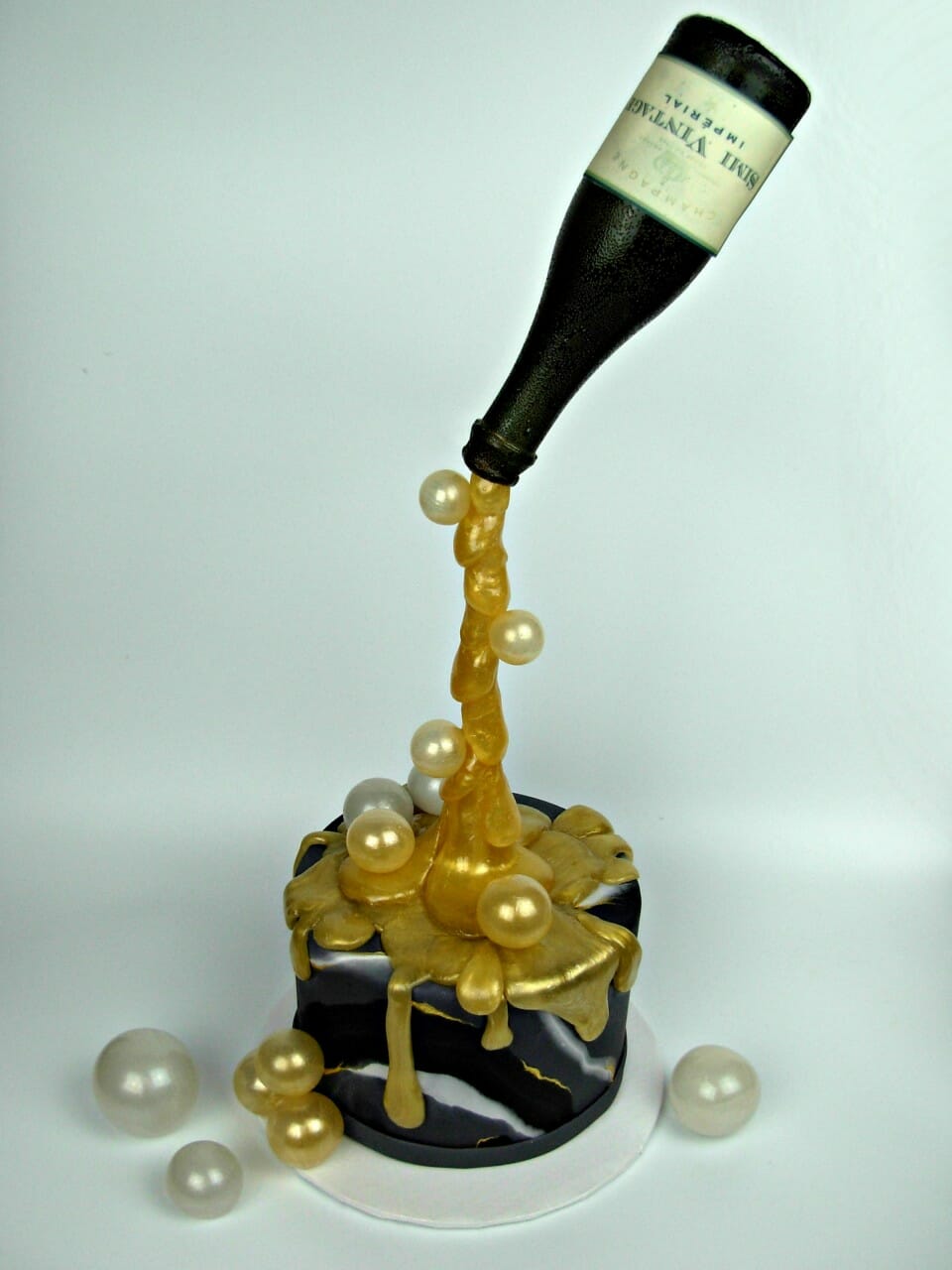
Now that you know loads about isomalt, and specifically Sidney’s brand, let me tell you about her two ISAC classes! On June 2, join Sidney in Studio B for her Gravity Defying Champagne Bottle Cake. Students will be able to use silicone molds to cast an isomalt champagne bottle, and they will also learn how to create blown bubbles. What is champagne without bubbles?! These techniques will be taught along with information on isomalt flavoring, color, clarity, stability, humidity, and of course safety. Students also get to take home their champagne bottle mold! Awesome.
The following day, June 3 is the Isomalt Castles class! Sidney’s students will receive a 3-piece castle mat set (that they get to keep) to create their own castle designs. The castles can be customized with impression mats, crests, molds, and edible paint! As an added bonus, Sidney will be teaching the students in this class how to create a hand-pulled isomalt rose!
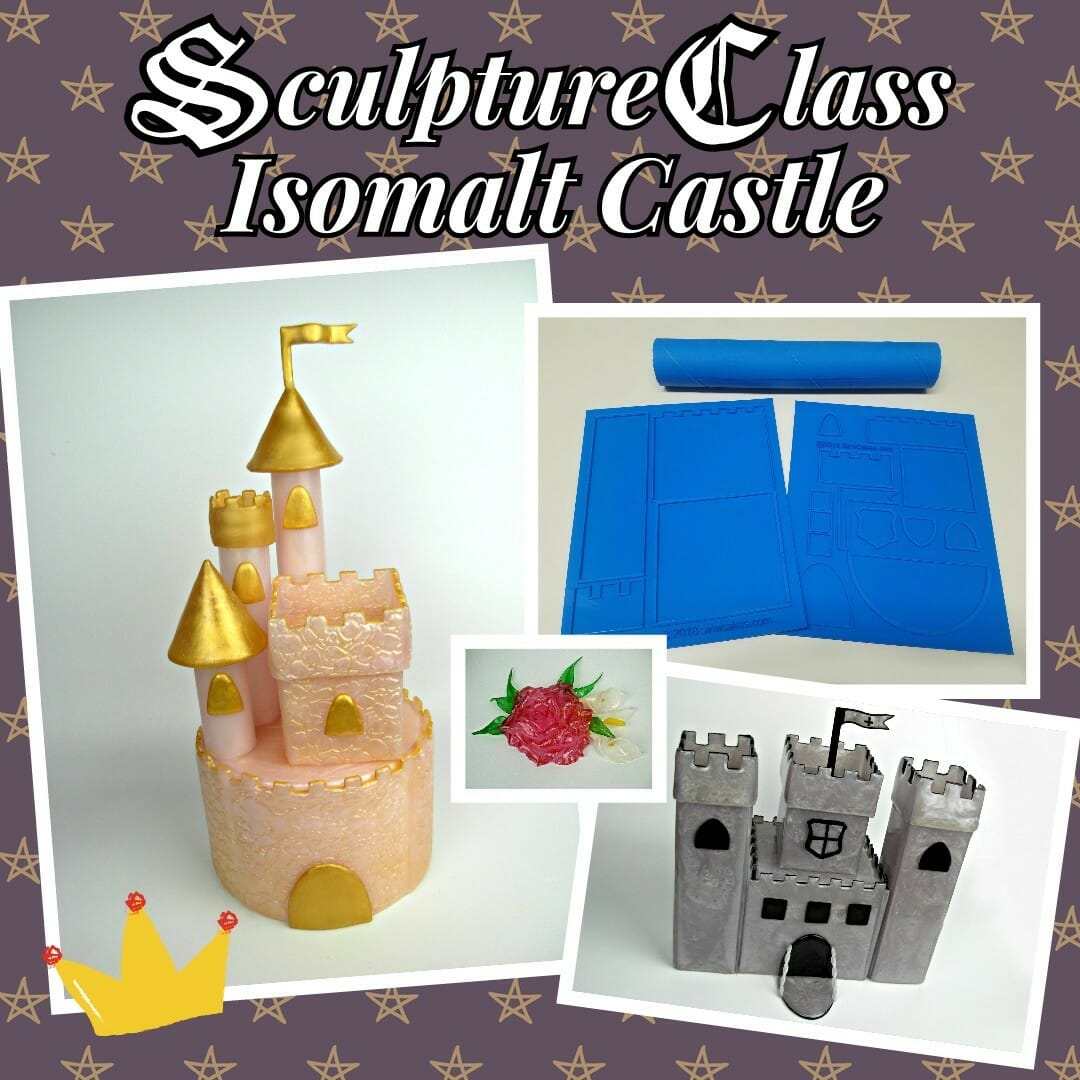
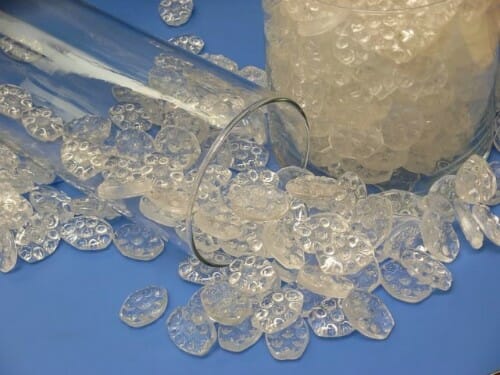
So, what do you think? Are you an old pro at isomalt? Or has this blog, and Sidney’s upcoming classes inspired you to give isomalt a try? The best news is that Sidney’s classes are both 1-day classes offered over a weekend (Saturday and Sunday), and are only $225 each. Not bad for a weekend of fun! So, what do you say? Will we see you at Sidney’s classes? Are you excited to give isomalt a try? Leave a comment on what you would love to make with isomalt. One lucky winner will receive a package of Simi Cake’s Clear Isomalt Tiles! Yay! Be sure to leave your comment by 4/25/2018, and include your name and contact information!
Sweetly yours,
Stephanie
2017 Finalist for the Cake Masters Cake Hero Award

WINNER of the 2017 Golden Tier Educator of the Year Award

Winner of the 2015 Craftsy Blogger Award for Best Craftsy Cake Decorating Instructor Blog
Chef Nicholas Lodge: 2015 Finalist for the Cake Masters Cake Hero Award